
Crafted in Europe, Shipped Worldwide
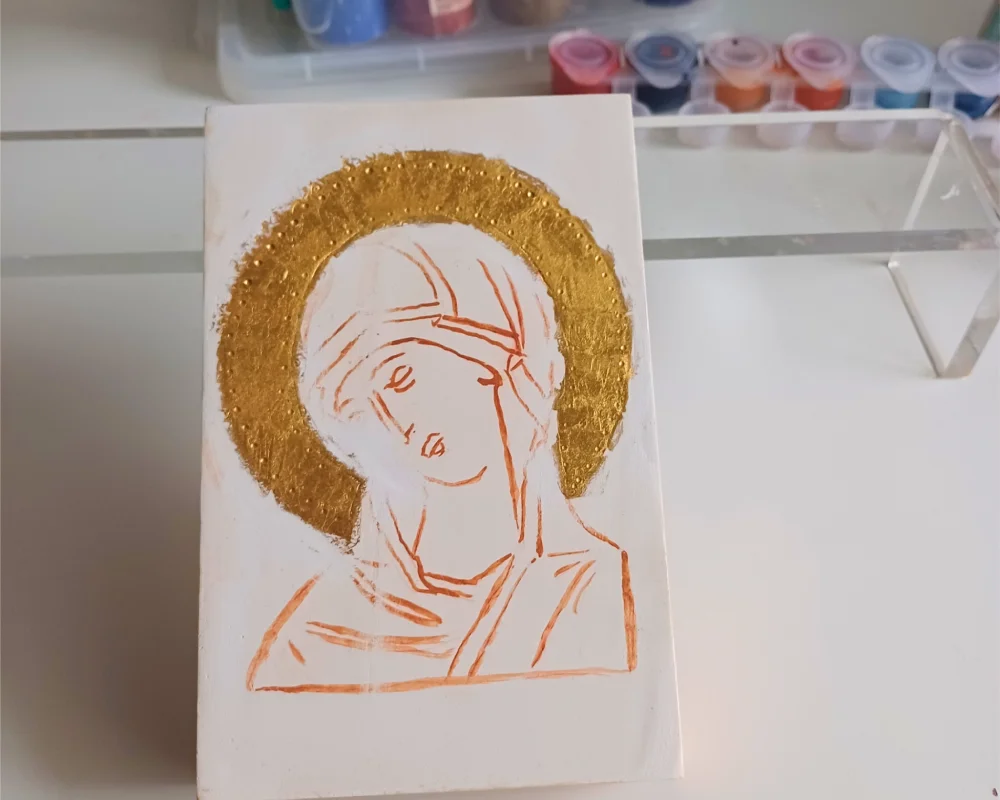
The Divine Glow: The Ancient Art of Water Gilding in Iconography

In the world of sacred art, few things capture the eye and the soul like the ethereal shimmer of an icon. When you look at a hand-painted icon, the radiance emanating from the halo isn’t just paint—it is the result of a meticulous, centuries-old process known as water gilding in iconography.
This traditional method, though demanding and time-consuming, is the only way to achieve that breathtaking “mirror-like” finish that symbolizes the Uncreated Light of God. In this guide, Iconoria Studio takes you behind the scenes to reveal how real gold leaf is applied to sacred images using the prestigious bolus (Armenian clay) technique.
The History of Gold in Sacred Art: From Pharaohs to Icons
The origins of water gilding in iconography stretch back further than many realize. While we associate it with Byzantine and Renaissance masterpieces, the pioneers were likely the Ancient Egyptians. They discovered that gold, a noble metal that never oxidizes or tarnishes, was the perfect medium to represent eternity.
In Christian iconography, gold is not a decoration; it is a theological statement. It represents the Kingdom of Heaven and the divine light that surrounds the saints. Unlike modern substitutes, genuine gold leaf remains vibrant for centuries, ensuring that the icon remains a window to the divine for generations.
Essential Materials for Professional Water Gilding
To achieve a professional result suitable for the demanding USA collectors’ market, one must use only the finest materials.The process requires patience and a specialized gilder’s toolkit:
- Gold Leaf: Thin sheets of 23.5k or 24k gold, often bound in small booklets.
- Gesso: A traditional mixture of animal glue and champagne chalk.
- Gilding Glue (Rabbit Skin Glue): The organic binder that holds everything together.
- Armenian Clay (Bolus): A specialized clay that acts as the foundation for the gold.
- Gilder’s Cushion and Knife: For cutting the delicate leaves.
- Agate Stone Burnisher: For polishing the gold to a high gloss.
Step 1: Preparing the Perfect Gesso Surface
Before a single flake of gold touches the wood, the board must be flawlessly prepared. The icon board is covered with multiple layers of gesso.
For water gilding, the surface must be “smooth as glass.” Any tiny hole, scratch, or crack will be magnified a hundredfold once the gold is applied. I spend hours sanding the gesso to ensure a perfect, ivory-like finish. If the foundation isn’t perfect, the gold leaf will never achieve its true potential.
Step 2: The Secret of Armenian Clay (Bolus)
The heart of the water gilding process is the bolus, also known as Armenian clay. This clay contains iron ions, which give it a distinct deep red, yellow, or even black color. I personally prefer the traditional red bolus for my icons.
Why use Red Bolus?
The red undertone provides a “warmth” to the gold. More importantly, the clay has unique adhesive properties. It literally “sucks in” the gold leaf, creating a permanent bond.
- Preparation: I prepare a 5-10% solution of rabbit skin glue.
- Mixing: I add several teaspoons of powdered Armenian clay (though some prefer pre-mixed liquid bolus, the powder offers more control for professionals).
- Application: Using a soft synthetic brush, I apply 10 to 12 thin layers of this mixture to the halo area.
- Drying: Each layer must dry completely until it turns matte before the next one is applied.
Once the final layer is dry, I gently sand it with very fine sandpaper and remove every speck of dust.
Step 3: The Ritual of Applying Gold Leaf
This is where the magic happens. To activate the rabbit skin glue within the dried bolus, I use an “activator”—traditionally a 40% alcohol solution. In my studio, I use high-quality vodka, which works perfectly to soften the clay just enough to grab the gold.
The Gilding Process:
- Cutting: I place a sheet of gold on the leather gilder’s cushion and cut it into smaller pieces using a specialized knife.
- Placement: Using a gilder’s tip (a flat brush made of squirrel hair), I pick up the gold and lay it onto the wet surface.
- Overlapping: I lay the sheets side-by-side. The red background must not show through.
- Layering: I repeat this process 2-3 times, pressing the gold gently with tissue paper to ensure full coverage and to hide any imperfections.
Expert Tip: While some artists use “composition gold” (schlagmetal), I never use it in my icons. Schlagmetal is made of copper and zinc; it oxidizes and turns black over time. Real gold is noble—it never loses its soul.
Step 4: Burnishing to a Mirror Finish
After the gold has “set” (usually after about 20 minutes), I press it firmly through tissue paper. Then comes the waiting game. After approximately one hour, the gold is ready for burnishing.
Using a highly polished agate stone, I rub the gold with firm, steady strokes. This compacts the gold and the clay underneath, turning the matte surface into a shimmering, reflective mirror. This is the hallmark of high-quality water gilding in iconography.
If the design requires it, I also use metal tools for punching (puncowanie). This creates intricate patterns, especially in the halos of the Blessed Virgin Mary, adding a layer of texture that catches the light from different angles.
The Symbolism of Gold in Icons
At Iconoria Studio, you will find a curated collection of hand-painted icons with gilded halos. In the Eastern Orthodox and Catholic traditions, the halo is not just a circle; it is the “Uncreated Light” of the Holy Spirit.
For example, when I work on an icon of Saint Michael the Archangel, the gilded halo represents his celestial authority and his proximity to the Throne of God. By using the water gilding method on bolus, I ensure that this light is as bright and enduring as the faith it represents.
Why Choose a Hand-Gilded Icon for Your Home?
When you invest in a handmade icon for your home or church in the USA, you are not just buying a piece of art. You are preserving an ancient tradition.
- Durability: Real gold leaf will not tarnish.
- Aesthetic: The depth of a water-gilded surface cannot be replicated by paints or chemical gilding.
- Spirituality: The labor-intensive process is a form of prayer and meditation for the iconographer.
Where to Find Hand-Painted Icons with Genuine 24k Gold Leaf ?
Water gilding in iconography is a labor of love. From the first layer of gesso to the final stroke of the agate stone, every step is designed to honor the sacred subject. Whether you are a collector or looking for a meaningful gift, understanding the difference between “gold-colored paint” and “genuine water gilding” is key to appreciating this divine art.
Would you like to see the process in action? Visit my gallery of custom-made icons to find a piece that speaks to your heart!
FAQ:
Q: Is genuine gold leaf better than imitation gold (Schlagmetal) for icons?
A: Genuine 23.5k or 24k gold leaf is a noble metal that never oxidizes, tarnishes, or changes color over time. Unlike imitation gold (composition leaf), which is made of copper and zinc and eventually turns black, real gold maintains its “Divine Glow” for centuries, making the icon a true family heirloom.
Q: What makes water gilding on bolus superior to oil gilding?
A: Water gilding on Armenian clay (bolus) is the only technique that allows the gold to be burnished with an agate stone to a mirror-like finish. This high-gloss effect creates a depth and luminosity that represents the Uncreated Light. Oil gilding (mixtion) remains matte and cannot achieve the same professional, celestial radiance required for high-end sacred art.
Q: Why is Armenian clay (bolus) used in traditional iconography?
A: Red Armenian bolus provides a flexible, smooth foundation that allows the gold leaf to be polished without tearing. Beyond its technical benefits, the red undertone adds a subtle “warmth” to the hand-painted icon, enriching the gold’s appearance and ensuring a permanent bond between the wood and the precious metal.
Q: Where can I buy a hand-painted icon with authentic water gilding?
A: Iconoria offers authentic hand-painted icons crafted with traditional 24k gold leaf. Each piece is a unique work of luxury sacred art available for worldwide shipping to collectors who value museum-quality craftsmanship and centuries-old traditions.