
Crafted in Europe, Shipped Worldwide
Printed vs Hand-Painted Icons: A Complete Guide

Choosing a sacred image for your home is a spiritual journey. Whether you are looking for an Orthodox icon for sale or a Catholic devotional piece, understanding the difference between a mass-produced print and a traditional hand-painted icon is essential. This guide explains why investing in luxury sacred art is a choice for generations.
Printed Icons vs. Hand-Painted Icons: Key Differences
| Feature | Printed Icons | Hand-Painted Icons |
|---|---|---|
| Craftsmanship | Reproduced by digital printing techniques | Crafted by skilled artisans using traditional methods |
| Uniqueness | Mass-produced, identical copies | One-of-a-kind, handcrafted devotional masterpieces. |
| Materials | Printed on paper or canvas | Painted with egg tempera on wood, often with gold leafing |
| Durability | Can fade or degrade over time | Timeless, can last for centuries if well cared for |
| Spiritual Significance | Serves as a decorative piece | Deep spiritual significance, invites prayer and devotion |
| Price | Affordable, mass-market pricing | Premium pricing for limited edition, handcrafted works |
| Investment | Affordable short-term choice | Long-term investment in fine religious craftsmanship |
| Personal Connection | Limited personal connection | Deep emotional and spiritual connection with the artist and the work |
Why Choose an Authentic Hand-Painted Icon? 5 Reasons to Invest in Sacred Art :
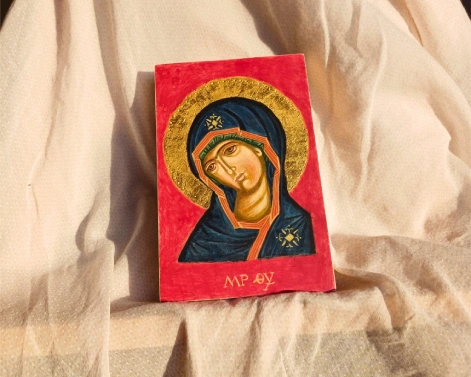
Hand-painted icons are a luxury sacred art. They are not simply decorative objects but authentic liturgical treasures that have been created with deep spiritual intention, using centuries-old techniques. Whether you’re looking to adorn your home with an icon of the Virgin Mary, a depiction of Jesus Christ, or a saint, the hand-painted icon offers a unique experience and spiritual connection that a printed version simply cannot replicate.
1. The Value of Traditional Byzantine Iconography Techniques
Hand-painted icons are masterpieces created by highly skilled iconographers, artists who spend years honing their craft. This dedication is evident in every brushstroke. The egg tempera technique, which is used to paint these pieces of luxury sacred art, is an ancient method that dates back to the Byzantine era. This method involves using egg yolk as a binding medium mixed with pigments, creating colors that are rich, vibrant, and durable. Over time, the artwork matures and ages beautifully, just like fine art.
One of the key aspects of traditional iconography is its uniqueness. Each icon is a one-of-a-kind creation—no two are the same. Whether it’s the exact shade of gold used in the gilding, the depth of the egg tempera colors, or the slight variations in the wooden panel shape, each hand-painted icon tells its own story and bears the artist’s personal touch. This is a contrast to printed icons, which are mass-produced and, therefore, lack the individuality and soul of a hand-painted piece.
2. The Sacred Art of Iconography: Traditional Materials and Egg Tempera Techniques
The process of creating a hand-painted icon requires years of dedication and training. Iconographers must learn how to mix natural pigments, master egg tempera painting, and perfect the art of gold leafing. The gold used in icons represents the divine, and applying it requires a high degree of skill and patience.
At Iconoria, for example, each icon is painted on linden wood, a traditional material chosen for its fine texture and durability. The wooden panels are not mass-produced but crafted by hand, giving each one a unique shape, size, and character. The gilding on the icons is done with gold leaf and requires extensive experience to ensure that the final result has the perfect balance of light and radiance.

3. The Beauty of Iconography: Emotion and Spirit
Hand-painted icons have a unique ability to evoke deep emotion. The expression of the holy figures, such as the Theotokos, my Mary Icons, and celestial Angels, is a result of the iconographer’s intimate knowledge of sacred tradition. Every brushstroke is carefully considered to capture the spiritual essence of the figure.
One of the most important features of a hand-painted icon is the artist’s ability to create a dynamic balance between the figures and the background. The background color of an icon should contrast with the figure, ensuring the subject of the icon remains the focal point, while also creating harmony with the overall composition.
As an iconographer, I personally spent years experimenting with various brushes and techniques to perfect my craft. It was only after years of practice that I discovered the use of squirrel hair brushes, which are incredibly soft and allow for smooth gradation of color without sharp transitions. This delicate technique adds an emotional depth to the icon that is difficult to achieve with any other medium.
4. The Icon’s Longevity and Timelessness
While printed icons may be more affordable and accessible, they do not have the lasting power of a hand-painted icon. A hand-painted icon is a timeless treasure that can be passed down through generations. Over time, the colors may deepen, and the gold leaf may take on an antique glow, adding to the aesthetic richness of the icon.
Printed icons, on the other hand, can fade or deteriorate over time. Hand-painted icons, such as those you can see in the Vatican Museums, are hundreds of years old and still radiate with their original beauty. These icons, often depicting the Mother of God, the sacred Mandylion, and other holy figures, are proof of the eternal nature of hand-painted religious art. The works of masters who painted these sacred images are now timeless treasures, and their spiritual significance continues to resonate with viewers across the world.
5. Unique Size and Shape of the Wood
At Iconoria, the wooden panels used for hand-painted icons are not machine-made or uniform. Each piece is handcrafted by skilled carpenters using linden wood, known for its fine grain and durability. The wood is shaped individually, ensuring that every icon is unique in both size and shape. This creates a sense of authenticity that mass-produced printed icons simply cannot offer.
Additionally, each piece is not mass-produced. I offer a limited edition of premium hand-painted icons, meaning that each artwork is exclusive. This makes the experience of owning a hand-painted icon a truly luxurious and personal investment in sacred art.
Conclusion: Printed Icons vs. Hand-Painted Icons
While printed icons may offer affordability and accessibility, hand-painted icons are an investment in eternal beauty. The craftsmanship, uniqueness, and spiritual significance of a hand-painted icon far surpass anything a printed version can offer. Whether it’s a majestic hand-painted Icon of Christ, a celestial Angel icon, or a personalized Patron Saint icon for a special gift, a masterpiece from Iconoria will elevate your sacred space and deepen your spiritual journey. These are not just images, but authentic religious treasures crafted with the finest materials to last for generations.
Ready to bring an exquisite piece of sacred craftsmanship into your home?
Browse my exclusive collection of icons today, and bring home a unique piece of sacred art that will last for generations to come.
FAQ:
How to tell a hand-painted icon from a print?
Hand-painted icons have a rich, layered texture and lack the tiny digital dots (CMYK) found in prints. Authentic icons use real gold leaf, which reflects light much more intensely than gold ink.
Why is egg tempera the best choice for icons?
It’s an ancient, natural medium made of egg yolk and pigments. Unlike synthetic paints, egg tempera is incredibly durable, does not fade over time, and creates deep, vibrant colors that mature beautifully.
Is the gold on Iconoria icons real 24K gold?
Yes, I use genuine gold leaf for halos and backgrounds. This traditional technique represents “Divine Light” and ensures the icon maintains its radiant, metallic glow for generations.
How should I clean my hand-painted icon?
Use only a dry, soft microfiber cloth to gently remove dust. Avoid water, detergents, or direct sunlight, as these can damage the delicate egg tempera layers and the gold leaf.