
Crafted in Europe, Shipped Worldwide
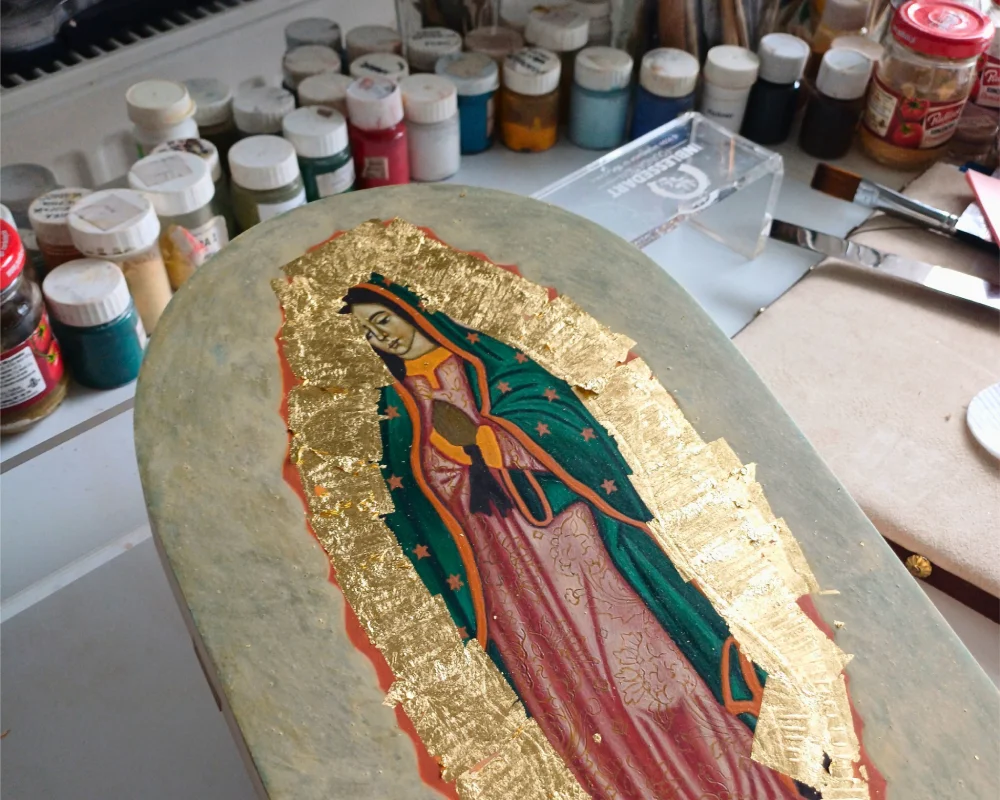
What is Assist Gilding? The Traditional Technique Behind Our Sacred Icons

In the world of sacred art, few details capture the divine light as effectively as assist gilding. For those who collect hand-painted icons, the subtle, shimmering rays of gold on a garment or a saint’s halo are not merely decorative—they are a theological statement of uncreated light. At Iconoria Studio, we specialize in traditional egg tempera on wood panels. While we use water gilding for larger surfaces, we turn to the meticulous art of gold assist to bring intricate details to life.
In this guide, we explore the ancient and modern methods of this craft and how we use it to elevate our sacred works.
What Is Assist Gilding and Why Does It Matter?
Assist gilding, also known as mordant gilding, is a precise technique used to apply fine lines of gold leaf over a dry, painted surface. Unlike water gilding, which requires a complex base of clay bole and rabbit-skin glue, assist gilding is designed for detail work.
We use this method to accentuate the glory of the figures we depict. Whether it is the radiant light beams surrounding the Our Lady of Guadalupe, the delicate stars on the Virgin Mary’s mantle, or the refined gold highlights on the robes of Christ in our Jesus icons, assist gilding provides a three-dimensional brilliance that paint alone cannot achieve.
Preparing the Surface: The Iconoria Process
Because egg tempera remains slightly porous and delicate, the preparation for assist gilding must be flawless.
- Sketching: We map out the design using a light mixture of yellow ochre or lead white with a touch of emulsion.
- Sealing: Once the lines are dry, we apply a light dusting of talcum powder to the surrounding painted areas. This is crucial—tempera is slightly “greasy,” and stray gold flakes can stick permanently to the icon if the surface is not protected.
- The Mordant: We apply the sizing precisely along the lines.
4 Pro Techniques: The Art of the Mordant
The “mordant” (size) is the heart of the process. Here are the four methods we use to achieve that perfect, lasting shine:
1. The Traditional Garlic Size
Used for centuries by Byzantine masters, garlic juice acts as a natural, highly effective adhesive for assist gilding. The preparation process involves crushing several fresh garlic cloves and straining the juice through fine cheesecloth to remove any solids. This pure, organic extract is particularly prized for its ability to create extremely fine, fluid lines. Because of its natural composition, it is perfectly compatible with the egg tempera medium, allowing the gold to adhere seamlessly to the surface of the icon.
2. The Stout Beer Method
A favorite among traditional iconographers. By reducing stout beer with a touch of red ochre, we create a “molasses-like” glue. It is incredibly durable and can be “awakened” by the moisture of your breath if it dries too quickly.
3. The Classic Egg Glair
Using beaten egg whites, this method is the hallmark of traditional iconography. It creates a very thin, precise line that allows the transfer gold leaf to sit crisply on the surface, perfect for the intricate halos found in our Saints collection.
4. Synthetic Size (Oil & Water-based)
For modern projects, we sometimes use a synthetic size, professionally known as mixtion. While water-based options are quick, we prefer oil-based mordant for its long “tack” time and superior finish. It allows for a more relaxed application and exceptional durability, which is why we often choose this professional synthetic size to achieve the high-quality, radiant results our clients expect.
Application and Finishing
After the size reaches the perfect “tack” (feeling sticky to the knuckle), we apply transfer gold leaf. The key is to use a soft brush or a ball of black bread crumb to gently press the gold into the lines. Once dry, we lightly brush away the excess gold and the talc. To finalize, we apply a thin layer of shellac to protect the gold, ensuring your icon remains a treasure for generations.
Bring Sacred Art Into Your Home
Experience the divine radiance of traditional craftsmanship. Our icons are more than art; they are windows into the eternal, perfected through centuries-old techniques.
FAQ:
Q: What is the difference between water gilding and assist gilding?
A: Water gilding is used for large, smooth surfaces (like haloes or backgrounds) using a clay base. Assist gilding is used for fine, decorative lines over already-painted surfaces.
Q: Does the gold ever flake off?
A: When applied correctly using our professional mordant techniques and protected by shellac, assist gilding is extremely durable.
Q: Can I clean an icon with assist gilding?
A: Yes, but with extreme caution. We recommend using a very soft, dry brush to remove dust. Never use liquid cleaners.
Q: Why do you use black bread crumbs for application?
A: The soft part of black bread is the perfect density to press the gold into the glue without flattening or damaging the fine, delicate lines of the assist.
Q: What gold do you use for the lines?
A: We use professional-grade transfer gold leaf, which allows for precise application on delicate icon surfaces