
Crafted in Europe, Shipped Worldwide
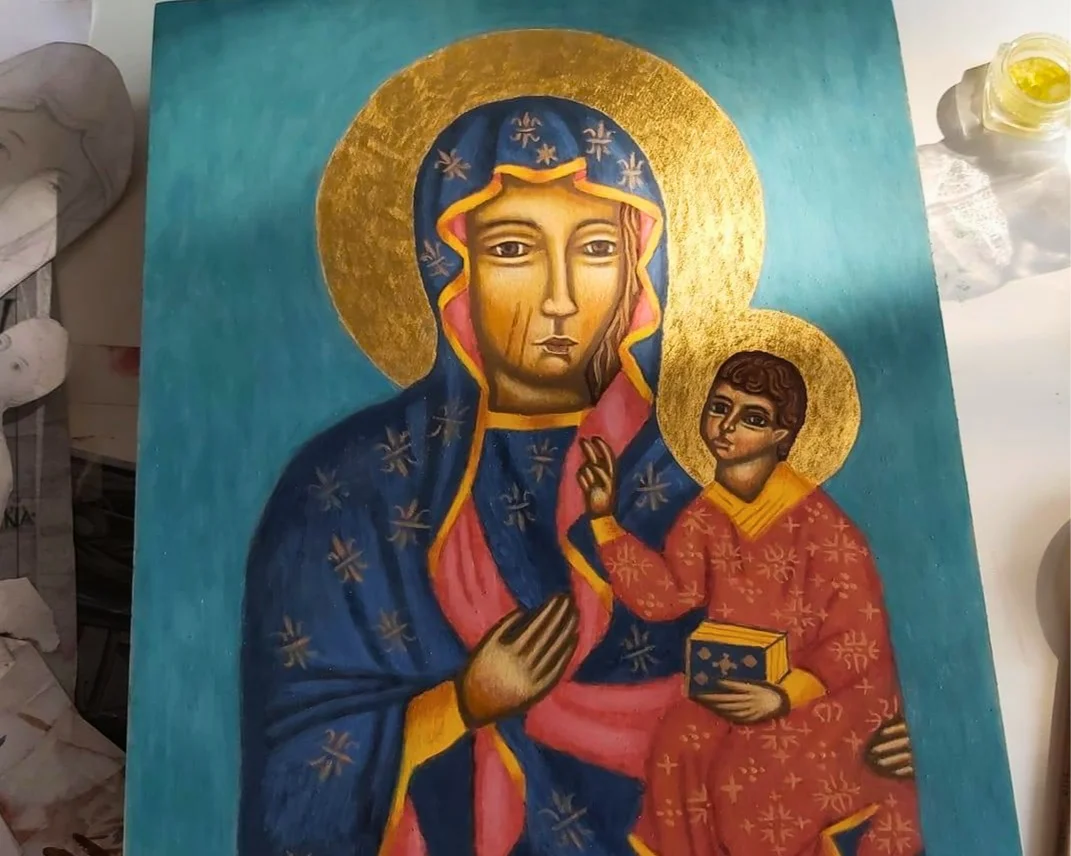
Why a Hand-Painted Black Madonna Painting is a Timeless Spiritual Treasure

Hand-Painted Black Madonna Painting is more than just a piece of religious art; it is a window into the divine, carrying centuries of history, faith, and unexplained miracles. Known across the globe as the Black Madonna Image, this iconic representation of the Virgin Mary has captured the hearts of believers from the silent halls of Jasna Góra in Poland to the grand altars of St. Patrick’s Cathedral in New York City.
As an iconographer, I have dedicated my life to preserving the ancient traditions of sacred iconography art. My work—a unique interpretation of the Our Lady of Czestochowa Icon—combines the strict canons of the past with a personal, vibrant color palette that brings this ancient protector into the modern home.
The History and Legend of the Black Madonna
The story of the Black Madonna is shrouded in both legend and historical drama. Tradition holds that the original icon was painted by St. Luke the Evangelist on a cedar tabletop from the Holy Family’s house. While art historians debate its exact origins, its presence in Poland since the 14th century is undisputed.
Housed at the Jasna Góra Monastery in Częstochowa, Poland, the icon is the country’s most sacred relic. The monastery is one of the most visited pilgrimage sites in the world, drawing millions of faithful who seek solace before the “Queen of Poland.”
The Scars of Faith: The Saber Cuts
One of the most striking features of any authentic Our Lady of Czestochowa Icon is the two parallel scars on Mary’s right cheek. These are not mere artistic choices; they represent a 1430 attack by Hussite raiders. Legend says that when a looter struck the painting with a sword, the image began to bleed, and the raiders were struck dead. Despite numerous restoration attempts over centuries, the scars always reappear—a symbol of the suffering and resilience of the Mother of God.
St. John Paul II: The Pilgrim Pope at Jasna Góra
No figure in modern history is more closely tied to this Black Madonna Image than St. John Paul II. During his many pilgrimages to his beloved homeland, the Polish Pope never failed to visit the Jasna Góra Monastery. He often spent hours in the Chapel of the Miraculous Image, kneeling before the icon in deep, silent prayer.
For John Paul II, the Black Madonna was a symbol of hope and national identity. He famously entrusted his entire papacy to Mary with the motto “Totus Tuus” (Totally Yours). His devotion helped spread the fame of this Hand-Painted Black Madonna Painting far beyond the borders of Europe, making it a globally recognized symbol of maternal protection.
The Royal Wardrobe: The Gowns of the Black Madonna
A unique and fascinating tradition in Poland is the “dressing” of the icon. The Our Lady of Czestochowa Icon is adorned with various ornamental gowns (known as sukienki) that are placed over the painting. These are not mere fabric, but masterpieces of jewelry and devotion.
Throughout the year, especially during major liturgical feasts, the gowns are changed. Some of the most famous include:
- The Amber Gown: Reflecting the “gold of the Baltic Sea.”
- The Diamond Gown: Shimmering with countless precious stones donated by the faithful as votive offerings.
- The Millennial Gown: Created to celebrate 1,000 years of Christianity in Poland.
In my own Hand-Painted Black Madonna Painting, I translate the richness of these gowns into the medium of paint, using gold leaf and intricate patterns to evoke the same sense of royal dignity and reverence.
A Masterpiece of Craftsmanship: Egg Tempera and Gold Leaf
Creating a hand-painted Byzantine icon is a liturgical act as much as an artistic one. Unlike modern mass-produced prints, my reproductions follow the painstaking “Slow Art” movement:
- Egg Tempera Technique: I use the ancient method of mixing dry pigments with egg yolk and wine. This creates a depth of color and durability that synthetic paints simply cannot replicate.
- Genuine Gold Leaf: The halos and backgrounds are adorned with 23-karat gold leaf, symbolizing the uncreated light of God.
- Wooden Panels: Each piece is crafted on seasoned wood, prepared with traditional gesso (levkas).
In my Hand-Painted Black Madonna Painting, I have introduced a personal color interpretation. While respecting the “black” patina—which historically resulted from soot and age—I have enriched the robes with deep, royal hues that highlight the majesty of the Christ Child and the Virgin.
The Miracles: Testimonies of Healing
The Black Madonna Image is world-renowned for its “intercessory power.” At the Jasna Góra sanctuary, the walls are covered with “votive offerings”—tiny silver hearts, crutches, and jewelry left by pilgrims as tokens of gratitude.
Many believers have provided documented testimonies of:
- Physical healings from terminal illnesses.
- The restoration of broken families.
- Spiritual peace during times of immense grief.
By placing a Our Lady of Czestochowa Icon in your home, you are not just buying art; you are inviting a legacy of prayer into your domestic church.
The Black Madonna in Global Cathedrals: From Notre Dame to St. Patrick’s
The influence of this icon is truly global. While its heart is in Poland, its spirit resides in the most famous cathedrals in the world.
St. Patrick’s Cathedral (NYC): In the United States, the icon holds a place of honor in New York’s iconic cathedral, serving as a beacon for the Polish-American community and all who seek the Virgin’s intercession.
Notre Dame de Paris: Even in the heart of France, at the Notre Dame Cathedral, a beautiful reproduction of the Black Madonna has long had its place, honoring the connection between French and Polish believers.
For those looking to deepen their collection of Eastern Christian art, this icon pairs beautifully with other classics. For instance, the Our Lady of Vladimir represents the “Tenderness” of Mary, while a Theotokos small icon is perfect for a personal travel altar.
Why Choose a Custom Hand-Painted Icon?
In a world of digital copies, a hand-painted religious icon holds a “presence.” Every brushstroke is a prayer. When you commission a Hand-Painted Black Madonna Painting from my studio, you receive:
- A unique work of art with no two pieces being identical.
- Materials that will last for generations (heirloom quality).
- A direct connection to the artist and the spiritual tradition.
Bring the Queen of Poland into Your Home!
The Black Madonna is a bridge between the East and the West, between suffering and hope. Whether you are of Polish descent or simply drawn to the profound beauty of sacred iconography art, this icon serves as a powerful reminder that we are never alone in our struggles.
Are you ready to bring a touch of the divine into your home?
Explore a collection of hand-painted icons, where every brushstroke carries a story of devotion.
FAQ:
Q: Why is Our Lady of Czestochowa called the “Black Madonna”?
A: The name refers to the dark skin tones of the Virgin Mary and the Christ Child. This iconic patina is the result of centuries of soot from beeswax candles and the natural aging of the protective varnish, giving the image its profound, mystical appearance.
Q: What is the significance of the scars on Mary’s face?
A: The two marks on her right cheek date back to a 1430 raid on the Jasna Góra Monastery. According to tradition, a looter struck the icon with a sword, and the image began to bleed. Today, these “healed” wounds symbolize resilience, maternal protection, and the shared suffering of the faithful.
Q: What are the “jeweled gowns” seen on the icon?
A: Known as sukienki, these are ornamental coverings made of gold, silver, and precious gems like amber or diamonds. They are offered as votive tokens of gratitude for miracles. In sacred art, these robes represent Mary’s royal dignity as the Queen of Heaven.
Q: Will the Hand-Painted Black Madonna icon be available for sale at Iconoria soon?
A: Absolutely. Iconoria studio is currently completing a unique, single piece of the Hand-Painted Black Madonna. This one-of-a-kind icon will be available in the shop shortly.