Crafted in Europe, Shipped Worldwide
Hand-Painted Jesus Christ Crucifixion Icon – Christian Religious Art on Wood
$2,500.00
An authentic, hand-painted masterpiece of Jesus Christ iconography, created in the sacred Byzantine tradition.
Crafted with traditional egg tempera and genuine gold leaf on a solid wood board, this one-of-a-kind Orthodox Crucifixion Icon is a profound window into the divine. A perfect sacred centerpiece for your Christian home altar, bringing the “Gospel painted on wood” into your daily prayer.
Orthodox Crucifixion Icon – Hand-Painted Byzantine Sacred Art on Wood
Authentic Orthodox Crucifixion Icon for Sale
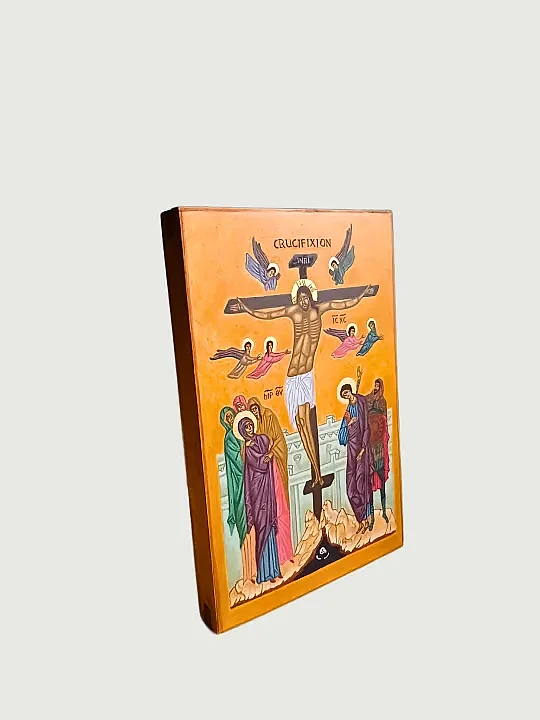
This Orthodox Crucifixion Icon is a one-of-a-kind work of hand-painted sacred art, created in the Byzantine Orthodox tradition using egg tempera, natural pigments, and genuine gold leaf on a solid wood board.
This icon is intended for prayer, contemplation, and as a sacred centerpiece for a Christian home altar.
The Most Powerful Icon in Orthodox Tradition
The Orthodox Crucifixion Icon is considered the most important and strongest of all icons in Eastern Christianity. It is often described as “ the Gospel painted on wood ”.
Unlike many Western depictions that emphasize physical suffering alone, Orthodox and Byzantine iconography reveals the Crucifixion as a victory over death, a moment in which Christ embraces the entire world with divine mercy.
The outstretched arms of Jesus on the Cross symbolize that no human being is excluded from His love, even the greatest sinner.
The Tradition of Jesus Christ Iconography
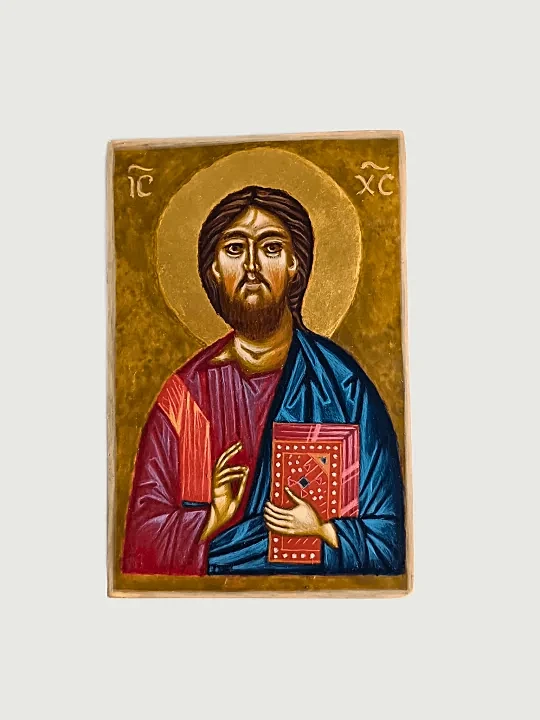
At the heart of Eastern Christian art lies the rich tradition of Jesus Christ iconography. More than just a portrait, it serves as a “visual theology,” communicating ancient faith through sacred colors and forms. In the Byzantine tradition, this iconography of Jesus Christ does not aim for mere historical realism; instead, it seeks to reveal eternal spiritual truths.
This hand-painted Crucifixion icon strictly follows the canonical language of traditional Jesus Christ iconography. It presents the Savior not only as a suffering servant but as the Victorious Lord who conquers death. Every detail—from the tilt of the head to the placement of the hands—is a faithful continuation of the ancient iconography of Christ.
For those looking to deepen their prayer life, an authentic example of Jesus Christ iconography offers a profound window into the divine, making it a perfect centerpiece for a home altar or a sacred collection.
Iconographic Description – The Scene of the Crucifixion
Christ on the Cross
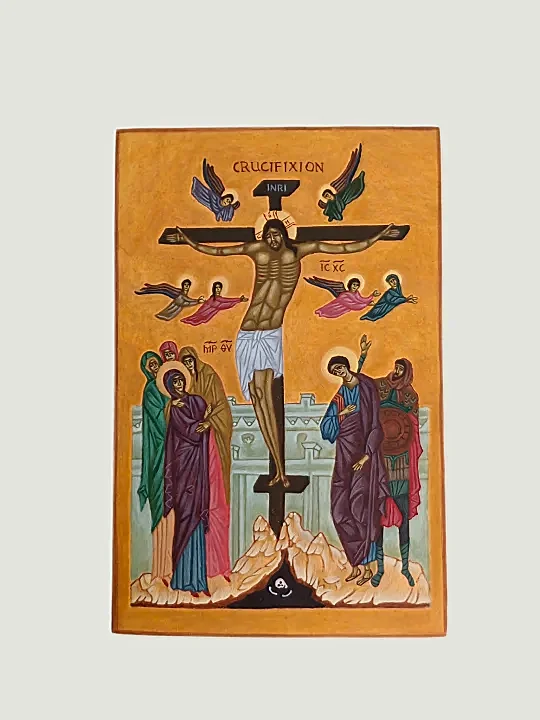
At the center of the icon stands Jesus Christ crucified, clothed in a white loincloth, a sign of purity and sacrifice. His body bears the holy stigmata—visible wounds on His hands, feet, and pierced side.
Christ’s eyes are closed, and His face is filled with humility, peace, and obedience to the Father. Above the Cross appears the inscription INRI, written in a simple and modest script, meaning:
Jesus of Nazareth, King of the Jews.
The Witnesses of the Passion
At the foot of the Cross stand:
-
The Mother of God (Theotokos)
-
Three holy women, faithful witnesses of Christ’s suffering
On the opposite side stands:
-
Saint John the Apostle, the beloved disciple
-
A Roman soldier, the only non-holy figure in the composition
The presence of the soldier emphasizes that Christ died for the entire fallen world.
Angels and the Heavenly Realm
Above the Cross hover six angels with wings, each dressed in different, vibrant garments. Their faces appear both masculine and feminine, young and old, symbolizing the fullness of creation participating in the mystery of salvation.
Painting the angels came naturally, while the soldier was the most difficult figure—reflecting the tension between holiness and the fallen world.
Landscape and Deep Symbolism
The icon includes:
-
Iconographic architecture
-
Stylized mountains
-
A black abyss beneath the Cross, symbolizing death and Hades
-
A skull, representing Adam and the defeat of death by Christ’s sacrificial death
This symbolism proclaims the Orthodox truth:
“By death, He conquered death.”
Color, Technique, and Materials
Egg Tempera and Natural Pigments
This hand-painted Orthodox icon was created using traditional egg tempera, a sacred technique preserved for centuries. Only natural pigments were used.
A unique artistic method was applied: pigments were never discarded from the palette. Instead, new pigments were continually added, creating layers of color memory. This results in exceptionally rich, luminous, and unrepeatable hues.
Each figure is painted in different colors, set against a calming background of light umber enriched with yellow and red ochre, which brings harmony and stillness to the entire composition.
Gold Leaf and Divine Light
Genuine gold leaf was applied to the halos of:
-
Jesus Christ
-
The Mother of God
-
Saint John the Apostle
-
The Angels
In Orthodox theology, gold represents uncreated divine light, not decoration.
Sacred Wood Board – The Tree of the Cross
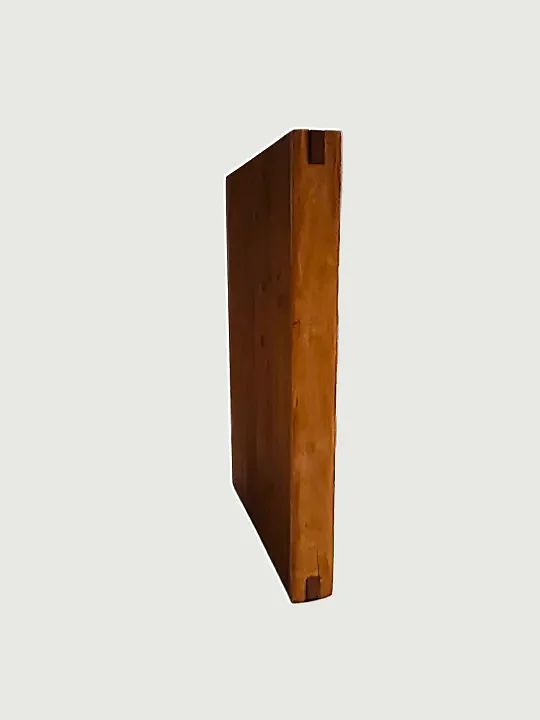
During my education at a School of Iconography in Poland, I was taught that the wood board itself symbolizes the Tree of the Cross. For this reason, I never drill holes or attach metal hangers to the back of my icons.
To injure the wood would be to injure the symbol of the Cross itself. This respect for material is a mark of authentic Byzantine sacred art.
A Story of Creation – From Easter to New Year
This Orthodox Crucifixion Icon was begun after Easter 2025 and completed one day before New Year’s Eve 2025, during a snowy winter day in Poland.
As the artist, I consider it a miracle that I was able to complete this icon. It was a true honor and a grace.
When I painted the final inscription inside Christ’s halo—symbolizing “I AM WHO I AM”—the sun suddenly broke through the clouds, illuminating the icon. At that moment, I knew the work was finished.
Vocation, Inspiration, and the Call to Paint Icons
Iconography is not merely a profession—it is a vocation. I have met artists who are not formally connected to the Church, yet feel called to paint icons. One workshop participant worked in a museum, had no sacraments, yet chose iconography over all other forms of art.
Even artists known for other genres are drawn to icons. A powerful example is Jerzy Nowosielski, a Polish iconographer who created icons, frescoes, and church polychromies, including sacred works connected with Lourdes in France.
The Crucifixion Icon and Prayer
Saint Francis and the San Damiano Cross
Saint Francis of Assisi prayed before the San Damiano Crucifixion Icon and heard Christ say:
“ Rebuild My Church ”.
Saint Francis later became the first saint to receive the stigmata, making the Crucifixion icon central to his vocation.
Meditation and the Diary of Saint Faustina
As a child, I attended Stations of the Cross and Good Friday liturgies. Later, reading the Diary of Saint Faustina, I learned that Jesus recommended contemplating His Passion—especially His trial before Pilate—as a prayer of immense power, greater even than physical mortification.
This icon was painted in that spirit of contemplation.
Explore Related Sacred Art from Iconoria
You may also be interested in:
-
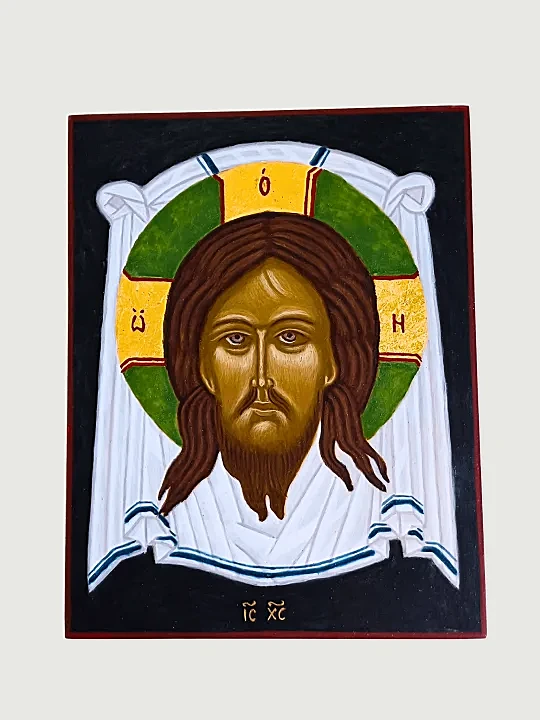
Mandylion – Icon of the Holy Face of Christ
-
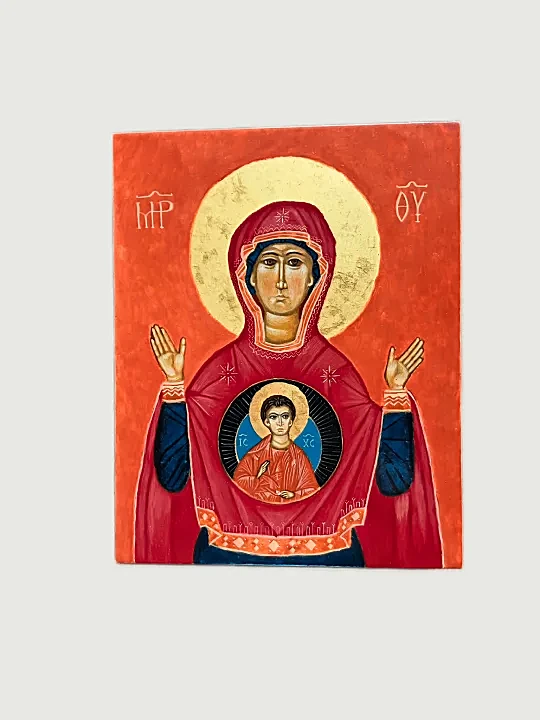
Mother of God Icons – Orant, Vladimir
For deeper reflection, visit my blog:
Educational References
To learn more about sacred and Byzantine art:
Ready for Worldwide Shipping
This hand-painted Orthodox Crucifixion Icon is finished, blessed by prayer, and ready for worldwide shipping, including the United States.
If you are looking to buy an authentic Orthodox Crucifixion Icon, created with faith, tradition, and devotion, this sacred work is available exclusively at Iconoria.
Bring the Gospel, painted on wood, into your home.